
IN THIS SERIES OF BLOG POSTINGS, WE FEATURE OUR ALUMNI AS THEY TALK ABOUT THEIR EXPERIENCE BEING IN THE PROGRAM AS WELL AS THEIR UNFORGETTABLE MOMENTS AS FORMER XU DEVCOM STUDENTS.

Why did you choose Xavier University, Development Communication?
Out of passion. But it took a long way to get there.
Back then, there were four of us going to school and my family was undergoing a financially difficult moment – the choice of a university degree was a practical one. The best scholarship I got was from the Department of Science and Technology (DOST), which led me to engineering.
I had practically finished all math requisites when it became apparent to me that I was in the wrong field – I was normally an outstanding student but my grades dropped to average. My family supported me in my decision to what to me was the most natural shift in degree – from Electronics and Communication to Development Communications.
It was a big decision to give up the scholarship to pursue what I categorically labelled as my passion, even if this also came at the expense of working a full-time job in my senior years. However, I distinctly remembered the day I came to consult with the DevCom department head then, Ate Estrella Borja. She had been so inspiring and had been my beacon of light as I made the shift and flourished in the course under her tutelage, up to when I graduated with latin honors and made my graduation speech under her guidance. I also ended up volunteering a year with her after university, to work in building and teaching in schools for the poor in far flung areas. I am forever indebted to her and all the department in those rocky and formative years.
Tell us about your experience with the program.
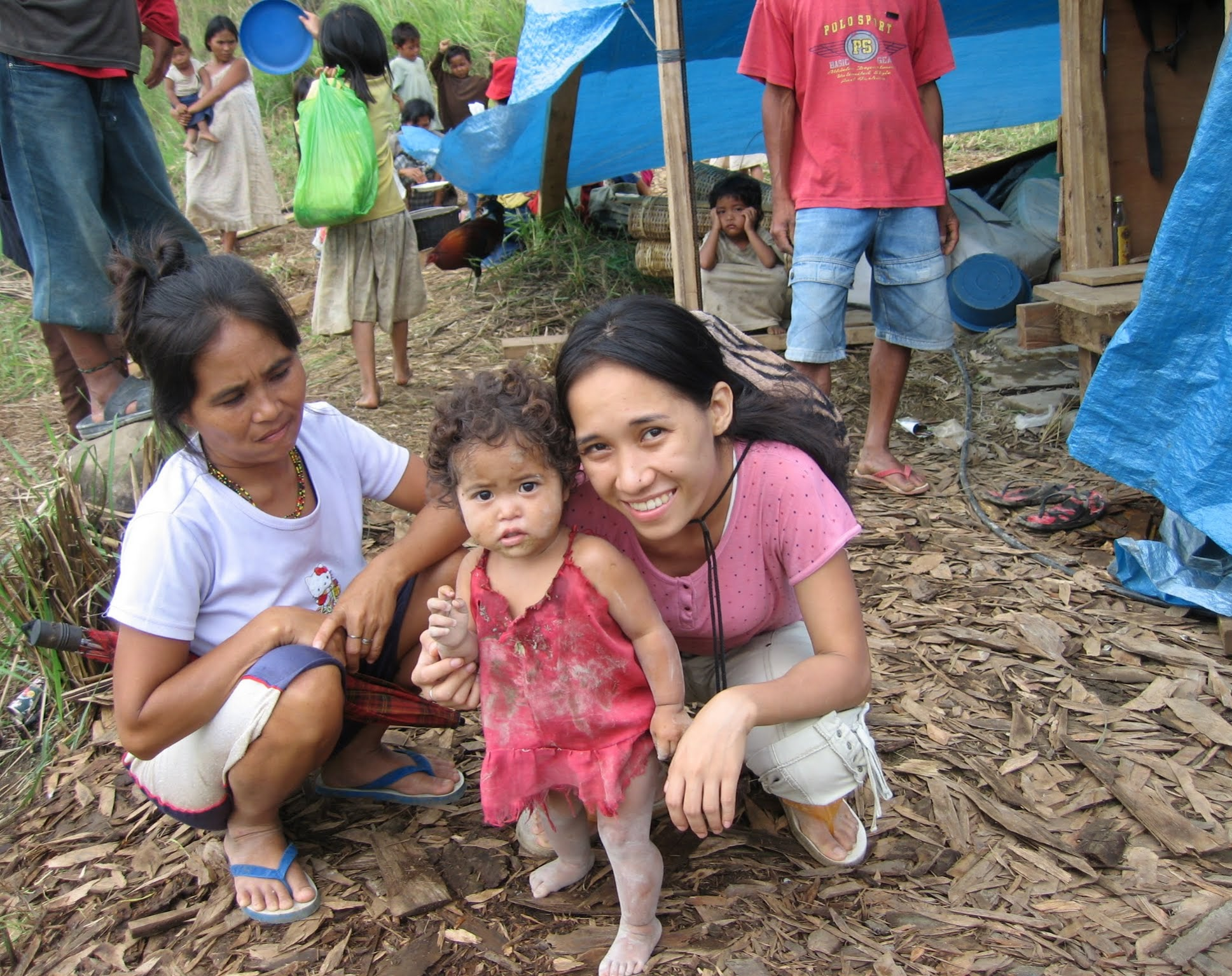
On top of the formation that set the foundation of my career, the best experience that stood out for me were those that were outside school. I remember having slept shivering on cold floor, sharing a hut with poor farmers in the cold mountains. I remember how we got there, by crossing a river with dangerous currents and just a rope to cling on to for life. And how we got back, tumbling on slippery slopes of mud and boulders after a rain.
And then I remember the people we went there for, to exchange with the people who are left in the margins, the children who have nothing on them but a big smile on their face. The same ones who would need to cross the same dangerous river and walk the whole morning to get to school, and then come back.

In this program, we lived what we were taught – an education enabling the uneducated. I may have easily forgotten the complexities of differential calculus, but decades after university, what stays with me are the unbelievable stories of poverty and the struggle to find something to eat day in and day out. It’s hard to forget the lessons that you’ve learned while laughing and staying together with the subject of your thesis. Or getting out of your comfort zone to understand better how to deliver mass communication to the marginalized.
What is your current job?
My work had led me to the Emirates, South Africa, Hong-Kong, and now I’m based in Paris. I’m currently managing the proposals and case studies of BeMyApp / Hackathon.com, a global tech enterprise organizing hackathons and other innovation events for blue chip companies like Google, Amazon, Nestlé, Microsoft, Samsung, and the likes.I’ve written more about my job in my LinkedIn here.
Are you using what you learned in college? Would you recommend it?
It is not always obvious what skill set one can use especially in the international scene. Working abroad is challenging: dealing with blatant discrimination, being part of the minority, being stereotyped, or having credentials not credited.The biggest thing I’ve learned are the values of compassion and humility, of collaboration and teamwork, of the art of listening in communicating, and of using effective words instead of impressive ones.
In this program, we lived what we were taught – an education enabling the uneducated. I may have easily forgotten the complexities of differential calculus, but decades after university, what stays with me are the unbelievable stories of poverty and the struggle to find something to eat day in and day out. It’s hard to forget the lessons that you’ve learned while laughing and staying together with the subject of your thesis. Or getting out of your comfort zone to understand better how to deliver mass communication to the marginalized.
What is your current job?
My work had led me to the Emirates, South Africa, Hong-Kong, and now I’m based in Paris. I’m currently managing the proposals and case studies of BeMyApp / Hackathon.com, a global tech enterprise organizing hackathons and other innovation events for blue chip companies like Google, Amazon, Nestlé, Microsoft, Samsung, and the likes.I’ve written more about my job in my LinkedIn here.
Are you using what you learned in college? Would you recommend it?
It is not always obvious what skill set one can use especially in the international scene. Working abroad is challenging: dealing with blatant discrimination, being part of the minority, being stereotyped, or having credentials not credited.The biggest thing I’ve learned are the values of compassion and humility, of collaboration and teamwork, of the art of listening in communicating, and of using effective words instead of impressive ones.
I’ve learned that the message is more important than the medium, that substance is heavier than form, and resilience wins over strength. Sure the techniques of communication helps in working across different countries: the high command of English, photography, videography, copywriting, design, theatre, public speech, etc. I believe, however, that the attitude learned plays a far more important role.The college gave me the can-do attitude, the firm belief that one can make a difference, and the looking out for other people’s welfare. We all learned magis in Xavier, this constant strive for excellence – but it is in DevCom where I learned best cura personalis.

Working in the midst of the tech industry it is clear to me that someday soon most of our current jobs are going to be obsolete. AI will take over and one day soon writing poetry might be more important than writing proposals, for example. With this in mind, I believe DevCom can equip individuals for the future of oneself and the community. I’d like to think that the DevCom is more than just a program. It is an outlook, a group of aptitude, attitudes and insights, not rigid rules or schemes. From this, we become highly adaptable and successful individuals mindful of a calling greater than ourselves.
————————————-




 Xavier Ateneo DevCom Department
Leave a comment