As COVID-19 continues to spread across the country and the world, a lot of things
have become uncertain. Without doubt, this pandemic took a hard hit on almost all sectors of the society, including our education sector. As teachers scramble to prepare their lessons and modules befitting the “new normal” (in the absence of a face-to-face learning), students (and their parents), particularly those who just finished the senior high, albeit abruptly, are also placed in a conundrum – what’s the best program to take this time?
While there are those who have already fixed their minds to a particular program, there are students who are still in limbo. If you can relate to this, then let me give you a suggestion – take up Development Communication (DevCom).
What is DevCom?
By technical definition, development communication is [2]“the art and science of human communication applied to the speedy transformation of a country and the mass of its people from poverty to a dynamic state of economic growth that makes possible greater social equality and the larger fulfillment of the human potential” (Quebral, 1971).
To put this simply though, development communication is the creative and strategic use of communication to bring about the change we want in society and the people that live in it.
How is the field different from other communication disciplines you may ask?
This figure will summarize it for you:

Why take DevCom, especially during this time of a pandemic?

At this time of a pandemic, the role of communication cannot be overly emphasized. To help people keep themselves and their loved ones safe from the pandemic, access to right and accurate information is essential. The core of DevCom to go out of what’s convenient to deliver the message to people, especially those who are hardly
reached by mass media, addresses this need. This is the main reason why students of the program take up courses in Photography in Development (to use the power of photos to tell stories), Fundamentals of Community Broadcasting (to explore the use of community radios in areas where television is not widely-used), and Introduction to Development and Folk Media (to allow more creative ways to convey a message).
In times where technical terms and concepts (such as the virus itself) are but alien language to the common people, it is imperative to translate and present these terms in words or visuals that get the message across. Thus, students are equipped with the ability to understand these big chunks of ideas and be able to convey it to the target audience in the simplest possible way. It is for this reason why DevCom students take up Risk, Disaster, and Humanitarian Communication, Introduction to Multimedia Writing, Writing and Reporting for Development, and Communicating Science for Development. Summative assessments for these courses look into how students present seemingly technical ideas into easily-understandable ones.
During this time when people are filled with anxieties, the strategic use of communication can help lessen people’s worries and help move them to action. To communicate with people better, an understanding of their context is often stressed in DevCom. Thus, students take up Interpersonal Communication for Development and Cross-Cultural Communication to teach them the essence of empathy and seeing things in their audience’s shoes in order to communicate more effectively.
Communication beyond the pandemic
It’s worthy to note that the role of communication does not end when this pandemic ends. In fact, this pandemic has just opened bigger windows of opportunities for students in the field of communication. It has allowed the government and private sectors to see how crucial the role of communication specialists and information campaign strategists is in involving and empowering the people to actively take part in society.
So if you’re still thinking of a program to take up in college, try DevCom. You may not be able to see yourself being passionate about something right now, but who knows if this passion will grow in you in the program.
Let’s be on the frontier of transforming this world through communication.
[1] https://www.hsph.harvard.edu/ecpe/public-health-communication-strategies-covid-19/

[2] Ongkiko, I. V., & Flor, A (2006). Introduction to Development Communication

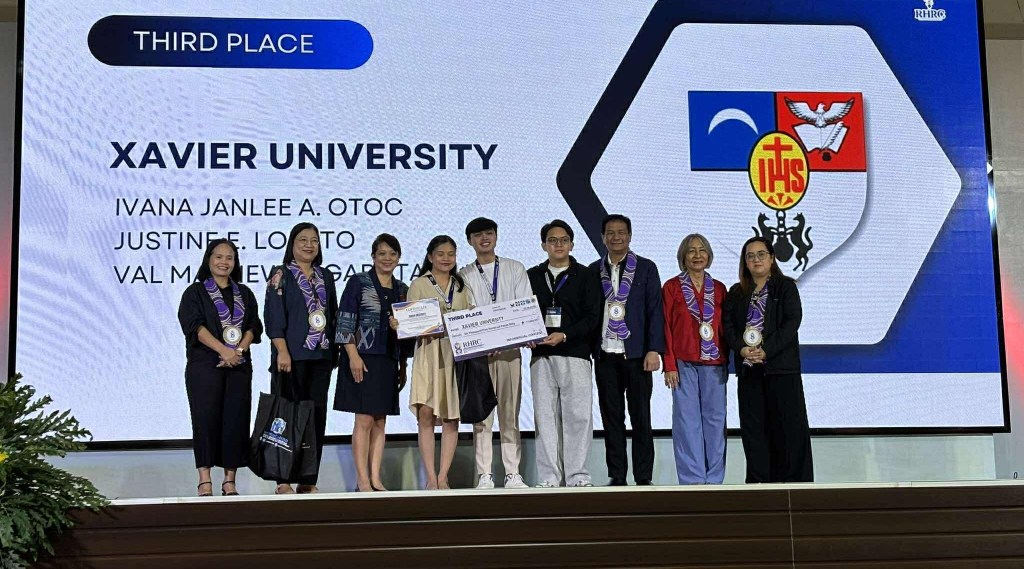


 Xavier Ateneo DevCom Department
Leave a comment